

What the Rough Sleeping Programme means for the Voluntary, Faith & Community Homelessness Response
October 15, 2026
Offering everyone a route off the streets this winter is an important ambition. To make that ambition lasting, emergency provision needs to sit alongside long-term move-on plans and a continued focus on preventing homelessness in the first place. This means ensuring people have somewhere safe to stay, the support to rebuild their lives, and a genuine route home.
The Government’s Everyone In Before Christmas ambition is an opportunity to make a real difference to people sleeping rough. Getting people indoors matters, but what happens next matters just as much.
As winter approaches, voluntary, faith and community organisations across England are preparing to play their part. Many have been doing this work for years, often filling gaps left by overstretched statutory services and supporting people who have nowhere else to turn.
Housing Justice is a membership organisation for faith and community-led charities delivering homelessness support across England. Through conversations with our network, we are hearing both a willingness to help and some important questions about how this ambition will work in practice. Where will additional provision be needed? How will existing services be supported? And what happens to people after Christmas?
These questions matter because success cannot simply be measured by how many people are brought indoors. It must also be measured by whether they can move towards a safer, more stable future.
Shelters are an important part of the solution
For some people, particularly those excluded from statutory support, a community or faith-based shelter can be the difference between having somewhere safe and welcoming to go and sleeping on the street.
These services provide an essential safety net for people who might otherwise be left with nowhere to turn, including some people with no recourse to public funds, people leaving prison and those facing other barriers to accessing accommodation. During severe weather, that safety net can be lifesaving, and the shared setting can also offer connection and a sense of community.
The sector has also spent years strengthening emergency accommodation and developing a range of models to meet different needs.
The Night Shelter Transformation Fund demonstrated what is possible when organisations have the resources to develop their provision. Alongside well-run communal shelters, many introduced single-room and year-round options, widening choice and creating more tailored effective ways to support people out of homelessness.
Today, around two-thirds of shelters operate communal models. This has grown year on year since the pandemic in order to keep up with rising demand for beds.
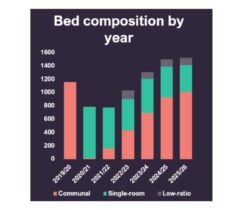
As pressure grows to increase capacity quickly, it is important that shelters are supported to not just provide the extra beds, but extra support for overstretched staff.
Many organisations are already working with stretched teams and limited resources, so appropriate funding, staffing and practical support are essential if they are to expand capacity while maintaining the quality of provision.
If we want everyone indoors by Christmas, organisations need the flexibility and resources to deliver the most appropriate mix of communal, single-room and other provision, alongside effective support and routes to move on.
Beds aren’t the only answer
One of the clearest messages emerging from our network is that creating additional emergency accommodation is not the only way to increase capacity.
Many services are operating at full occupancy, while some people are ready to move into independent accommodation. The problem is not necessarily a lack of supported accommodation. It is the shortage of suitable, affordable housing, and the support people need to make a tenancy work.
Across England, voluntary, faith and community organisations provide much more than a place to sleep. They offer advice and advocacy, help people access healthcare, provide food and practical support, run day centres and community hubs, and build the trusted relationships that can help someone begin to engage with services.
Housing Justice’s recent research into England’s homeless day services highlights the important role these organisations play in helping people move on and avoid returning to homelessness.
As one survey respondent explained:
“We support people who have moved on to sustain a tenancy supporting with their utility bills and ensuring they pay their rent.”
For some organisations, this support goes well beyond practical help. Another respondent described the lasting relationships that services build with people:
“We become people’s family, so even when they move on, we stay involved, sometimes for years. We don’t just focus on the practicals such as direct debits but on supporting people to access their new community.”
This is what a successful move-on should look like: not simply helping someone secure a tenancy, but supporting them to settle in, build connections and avoid becoming homeless again.
Yet this work is not always funded. Our research found that some services provide floating support through goodwill alone, despite growing demand. Others have had to scale back their resettlement work because of funding constraints, even when they recognise how much more they could offer.
One respondent warned:
“We do offer floating support for tenancy sustainment, but we are unfunded, so this is done from good will… with rough sleeper numbers increasing in our borough every year this is a huge concern.”
These pressures have real consequences. When people cannot access suitable housing or the support needed to sustain it, they can remain in emergency accommodation for longer than necessary. This reduces the capacity of services to support others and risks people returning to the streets when a tenancy breaks down.
Without this wider approach, we risk creating a revolving door in which people move between the street and temporary accommodation without finding a lasting solution.
Getting quality right from day one
Organisations setting up new provision, or adapting existing services, need practical tools to help them get the basics right from the outset.
In areas where new emergency provision is being established, local authorities should look to experienced communal shelter providers who have developed safe, high-quality provision over time. Housing Justice’s network includes many such organisations, and through our work with them, we’ve developed best practice resources to support providers across a range of accommodation settings.
Today, Housing Justice has published a new checklist for emergency accommodation providers. Based on our extensive Quality Mark accreditation framework, this condensed resource sets out 32 criteria to help providers review their policies, practices and procedures and identify areas for development.
We encourage organisations to use it as a starting point for building safe, dignified and good-quality provision from day one.
Government cannot deliver this alone
Much of the funding for the Rough Sleeping Programme is expected to flow through Mayoral Combined Authorities and local authorities, rather than directly to voluntary, faith and community organisations.
That makes meaningful partnership working essential.
Local authorities need to engage with organisations on the ground to understand where provision is needed, what form it should take and how existing capacity can be used effectively. Community organisations are also often deeply connected to their local areas. They understand who is falling through the gaps, where provision is missing and what people need. They can mobilise local support quickly and adapt their services as circumstances change.
Housing Justice’s data shows that community-led services have continued to respond to local need, even as some commissioned services have reduced their bed spaces under funding pressures.
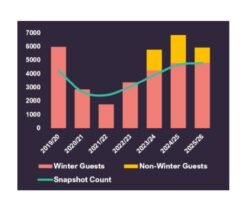
This capacity, expertise and local knowledge should be central to the delivery of the Rough Sleeping Programme, not brought in as an afterthought.
This initiative is an opportunity to make meaningful progress towards ending rough sleeping. We know a bed for the night can be a vital first step. The real test is whether that first step leads somewhere: to appropriate accommodation, the right support, a stable home and a community where someone can rebuild their life.
That requires investment in existing services, new provision where it is genuinely needed, faster routes into suitable housing, and recognition of the vital role played by voluntary, faith and community organisations.
The sector has the experience, relationships and local knowledge to help make this happen. What it needs is meaningful involvement, adequate resources and a shared commitment to lasting outcomes.


