

B2: How to create a welcome pack
Biblical Introduction
When you enter a house, first say, “Peace to this house.” Luke 10:5 NIVUK
The LORD had said to Abram, ‘Go from your country, your people and your father’s household to the land I will show you. ‘I will make you into a great nation, and I will bless you; I will make your name great, and you will be a blessing. I will bless those who bless you, and whoever curses you I will curse; and all peoples on earth will be blessed through you.’ Genesis 12:1-3 NIVUK
At a glance
- Welcome gifts and packs are an unconditional gift that model God’s unconditional love and blessing and the gift of Jesus.
- Contents should be contextually relevant for the area and people.
- Deliver with a posture of friendship rather than institutionalism.
Key Points
Welcome packs serve multiple purposes. They model God’s blessing, they are a gateway to friendship, and they show love by offering practical help as people move house and settle into a new area.
It is always good to include a gift not just information – in this way we model God’s blessing.
Be careful to ensure that the Welcome Pack is a genuinely unconditional gift – not a means of ‘data collection’ or an opportunity by which to tell people about our church, or even faith (unless/until invited) but simply a love gift.
Wherever possible visit the new residents in person and make friends, rather than simply leaving it with the sales office to pass on (although this is not always possible, particularly with flats/apartments, which are not always accessible). Include a personal name and contact number so that there is an opportunity for friendship to grow.
There is not a ‘one size fits all’ welcome pack, any more than there is a one size fits all way to love new housing areas. Build on the principles but make your pack contextually relevant for your community. Here are some examples below.
Working in partnership with the housing association, Ali delivered welcome baskets on moving day to a community that is largely social housing, some of whom were moving from temporary or hostel accommodation into their first real homes. The baskets, which were funded by the housing association, contained practical, moving day gifts alongside community information. (See the photo and list below). As the demographic of people moving into the community changed, and it was no longer possible to visit on moving day, the gift changed to chocolates, but the underlying unconditional nature of the gift, the attitude of friendship, and community information remained the same. Now as she begins to welcome a new community, there are gifts and blessings in bags as the baskets were too expensive.
Penny wanted to create a gift for a middle-class professional community but had little money to fund such gifts. In wealthier communities, the symbolic nature of the gift is more important than something practical. She found simple but tasteful candles, which she wrapped in cellophane. These were well received.
Stephen and John delivered cakes as a welcome to their local new community. These were made by church members. This is a lovely, and often well-received, gesture that has been used in many new housing areas since. However, do check food health and safety requirements before settling on this approach.
Sue was unable to access the flats to visit, as they do not have outside doors. So she worked in partnership with the builder who delivered the welcome packs for her.
Do make sure you include information about the area, details of local churches and contact details. Invite the new residents to get in touch, if they would like to, with ideas of ways in which you might work together to make the community a great place to live. Or, if your conversation goes well, arrange to meet for a coffee!
What to say: People sometimes worry about what to say on the doorstep. Ali simply said ‘I’m Ali. I’m your neighbour. I’m a Baptist minister, but I am here to serve people of all faiths and none. What shall we do together to make this a great place to live?’ You may not be living in the area, so you can explain that you live nearby, and you want to welcome the new residents. If you aren’t a church leader or pioneer, explain that you are part of a church, but want to welcome everyone regardless of faith.
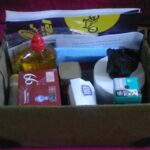
Includes: Tea, Coffee, Sugar, Toilet roll, Bin bag, Washing up liquid, Dish cloth, Light bulb, Bus timetable, Cycle map, Information from the council on travel & safety.
Ali found that no one turned down an unconditional gift. She also found that this initial unconditional gift often led to friendship and, sometimes, to sharing lives together. Although the gift was given without an agenda, it was this unconditional gift that set the foundation for conversations about faith, and people coming to faith, in the months and years that followed.
Learning Points
- Some people have delivered welcome or blessings cards to the new residents. Whilst this is a beautiful unconditional blessing, it tends not to have the same impact in terms of building friendships as when these is associated personal contact.
- Similarly leaflets inviting people to events, without a relationship, have not yielded a good response.
- Welcome packs that are very ‘churchy’ can work well with those from a churched background, whether or not they attend church now, but can be seen as an irrelevant ‘church thing’ for those beyond church structures. This may not work well if your vision is to bless and engage with the whole community.
Other Links and Resources
For details of contributors, see The Contributor’s Page.
Marsh, P., & Boulton, A. (2016). Pioneer ministry in new housing areas:
Personal reflections and a practical guide. Cambridge: Grove Books Limited.
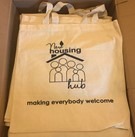
Welcome Bags are available through the New Housing Hub, contact us.
Thank you to John Bentley, Penny Marsh, Stephen Rand & Sue Steer for sharing their stories and wisdom and to Dan Simpson for his support with the interviews.
This guide was written by Alison Boulton, a Baptist Minister and co-founder of the New Housing Hub.


