Rewriting the Story: Representation of Homelessness Matters
October 20, 2025
By Keira McNulty, Marketing and Communications Co-ordinator at Housing Justice
When people think of homelessness, there’s often a single image that comes to mind – a man in a beanie hat, head bowed, sitting on the pavement with a cardboard sign. It’s a picture we’ve all seen. And it’s one that continues to dominate the media, charity campaigns, and public perception.
But homelessness doesn’t always look like that. In fact, it rarely does.
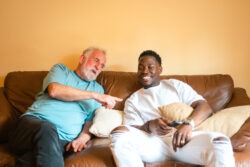
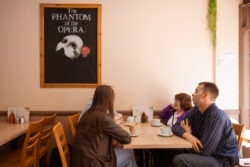
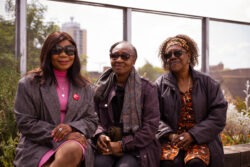
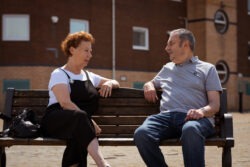
At Housing Justice, we’ve made a conscious decision to challenge stereotypes. We’re actively working to dismantle the imagery that flattens people’s identities into recognisable narratives that convert donations. My role as Marketing and Communications Co-ordinator is to support Housing Justice’s diverse projects in telling people’s stories truthfully, respectfully, and with dignity. That means showing the human complexity of homelessness: people of different ages, ethnicities, genders and backgrounds – people who are parents, carers, students, employees, migrants, survivors – people who laugh, hope, rebuild, and belong.
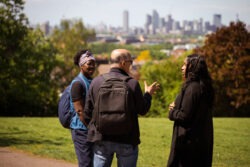
This work is also about documenting the broader story of Housing Justice – one that goes beyond individual experiences to capture the power of community. Our photography and video shoots highlight the everyday acts of compassion and cooperation that underpin our projects: volunteers supporting people, hosts and resident landlords welcoming guests, communities working together to create homes and rebuild lives. By building a strong internal library of authentic imagery and film, we’re ensuring that our communications reflect the reality of what we do – not just responding to homelessness, but inspiring collective action and belonging.

Organising the shoots requires careful planning, deep listening, and a lot of co-ordination. By working with a skilled photographer, colleagues, volunteers, and people we support, we’re able to co-ordinate creative and often joyful days of filming and photography. There’s usually a rough plan, but a lot of it comes down to who turns up, what the weather’s doing, what people are willing to share and how they want to tell their story. We embrace that unpredictability. It means we can respond to ideas in the moment, avoid scripted scenarios, and create something more real, more human, and more collaborative.
Of course, this approach isn’t without challenges.
Within Housing Justice and across the charity sector, there are real and valid concerns about power dynamics. When someone is being supported by an organisation, can they truly say “no” when asked to participate? Even with clear consent processes, full transparency, and the option to withdraw at any time, the concern remains. It’s a debate that continues, and one we take seriously.
But we are guided by our values:
Compassion means we create a culture of kindness and care in our communications work – creating space for people to ask questions, raise concerns, and choose their level of involvement, if any at all.
Courage means being willing to do things differently, rising to the challenge of changing the way homelessness is seen, even when it’s difficult and uncomfortable. We are not here to make people feel pity. We are here to build empathy, centre dignity, and to move forward the conversation about homelessness.
Collaboration means making space for shared authorship. We don’t just point the camera, we ask people how they want to be seen. We ask what feels right to them. And through that trust, something powerful happens: people become co-creators in telling their story through authentic words and imagery.
Feedback from participants has been deeply encouraging. Many describe the experience as not just positive, but empowering. The filming and photography days offer people a chance to connect, to contribute, and to feel safe and seen.

We know we won’t always get it right. This work is complex and we’re still learning, listening to feedback, reflecting, and adapting as we go. We recognise the very real despair that comes with homelessness and housing injustice, and we would never want to brush over that. But at Housing Justice, our work is about more than crisis response. It’s about building community, confidence, and connection – things that help people feel like they belong. Our communications work is aiming to reflect that wider picture too: showing the hope, the resilience, and the rebuilding that sits beside homelessness.