

Leeds
Homelessness prevention through a fresh expression of church
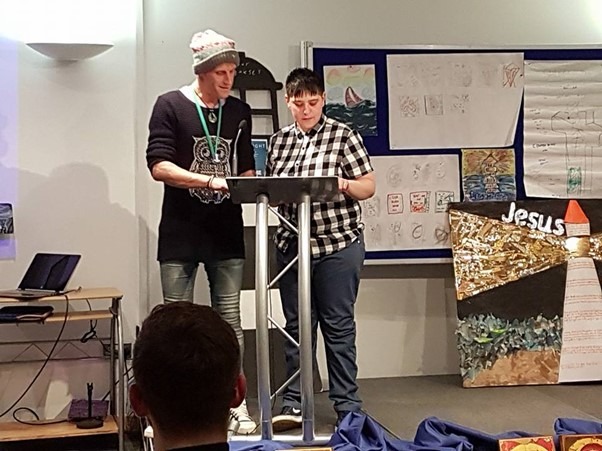
‘Homelessness is related to chaos. Relationships are key in recovery, and that is the theory behind Lighthouse.’ – Revd Jon Swales, Lighthouse Mission Priest.
Summary
Lighthouse is a fresh expression of church specifically tailored to those who ‘are battered and bruised by the storms of life’. Many of their community have experienced homelessness, addiction issues, criminal backgrounds, poverty and mental health problems.
Alongside running church services, they provide pastoral support to their members. Their work has lots of outcomes – bringing people to God, helping with their mental health – but one of the key things they identify is preventing homelessness. Because of the needs of their community, they place a great emphasis on street outreach and identifying and addressing people’s needs.
However, preventing homelessness requires more than this. Jon explains that many people who have experienced homelessness end up back on the street. Although they are provided with housing, they often don’t have basic items such as a kettle, or the ongoing support they need. By providing interesting activities, helping people with their physical, emotional and spiritual needs, and if necessary kitting them out with belongings, Lighthouse supports people to stay in their homes. Because of their success, the council has now commissioned them to provide support to those who need adult social care.
Jon believes that churches can provide something that mainstream services often can’t. They have levels of staffing (including volunteers) which would not be possible in statutory settings. This provides flexibility – if relationships with a ‘client’ break down in a standard caring service, the care is harmed. At Lighthouse, another member of their team can work with this ‘brother or sister’, making sure that progress is not lost. The final element of Lighthouse’s success is love. They do not hide from the council the fact that they are a church. Showing the love of God and of a large, welcoming community can keep people in their homes when they’re missing the camaraderie of the street.
Alongside Sunday morning worship, Lighthouse run a weekday bible study group, which gets good attendance and engagement despite having no food element. They have also started Academy, a year-long college-style module ‘following Jesus through the storms of life’. Here, they teach people the bible, along with life skills and mental health techniques.
Background
Jon Swales, a curate at St George’s, Leeds – a large, city centre resource church – prayed ‘help me to come across those who are smashed up by life’. In 2013, his prayers were answered when many people with multiple and complex needs started coming to Christ at St George’s, which is based next to a homeless shelter in Leeds. As this number increased, Jon realised that there was lots more they could do for this new group if they formed a new church based around their specific needs.
He asked St George’s if he could begin a fresh expression of church with them. After Jon put together a five-year plan, St George’s and the Diocese funded the creation of Lighthouse, extending Jon’s curacy to oversee this work. Numbers quickly increased, and soon it became a separate charity, originally staffed by just Jon and an intern. When Jon’s curacy ended in 2019, the Diocese and St George’s agreed long-term funding. They now employ three full-time and two part-time staff, as well as volunteers.
Impact
“I lived in a car park, injecting heroin and living in chaos and crime. In autumn 2014 I found Lighthouse and received love, practical help, prayer and heard the Gospel. Since then, I have been walking heroin-free, found life in Jesus, been baptised and can now contribute to Lighthouse and wider society” – Geery.
- About 150 people would call Lighthouse their church, and typically around 80 attend on a Sunday for a service followed by food. Jon says ‘We don’t force anyone to come to the service, they could come to the meal for free’, but people still come.
- Over 70 people have been baptised from their community.
- Their success means that Lighthouse now trains other churches to work with people with multiple and complex needs.
- Long term, Lighthouse would like to establish a full time day centre, to provide as many activities for their community as possible. They are also investigating the possibility of establishing a small religious community – a form of ‘new monasticism’ – in a wardened campus.
“Before I knew Jesus I was struggling with a history of abuse, drug addiction, mental health issues and bullying. But since being shown love at Lighthouse and getting to know Jesus I’ve kept pushing the FROG (“Fully Reliant On God”) and now I love him more. I still struggle with my past but I know that he is with me and giving me peace.”
What do you need?
Personnel
- Lighthouse has a dozen volunteers giving about twenty hours a week, along with three full-time staff – Jon, another pastor and a warden – two part-time trainee pastors and an intern. They also take about twenty placements from different colleges each year.
- However, they started with just one curate and an intern.
Finances
- Lighthouse’s budget is about £150,000 a year now, but they started with just enough for Jon’s stipend and funding an intern.
- They are funded by St George’s, Leeds (a resource church), The Crypt (a homelessness charity set up by St George’s) and the Diocese of Leeds, along with a small number of individual givers and some minor grants.
- They also receive about a third of their income from Leeds City Council’s Adult Social Care Service – they are commissioned to care for specific individuals, and they use this income to fund their work.
- They are often able to undercut other agencies because of their use of volunteers, which they do not hide from social care.
Partnerships
Their work would not be possible without good relationships with the council, and particularly with the adult social care department.
Tips
- Lighthouse are eager to share their approach, so get in touch with them, or look out for their evening course, Mission, Theology and Ministry for the Margins.
- Jon argues that this work is done best if it’s ‘at the centre’ of your mission.
- He emphasises that good safeguarding is crucial to this work, to protect the community and those working with them. The policies used for a traditional church are unlikely to cater for the level of needs in this setting.
- Language is incredibly important – those in Lighthouse’s community are their brothers, sisters and siblings, not service users or clients.
- Experimentation is key to engaging those with multiple and complex needs. Try new things, and if something’s not working don’t be afraid to give it up.
Find out more about Lighthouse on their website.


