

Ambleside
Summary
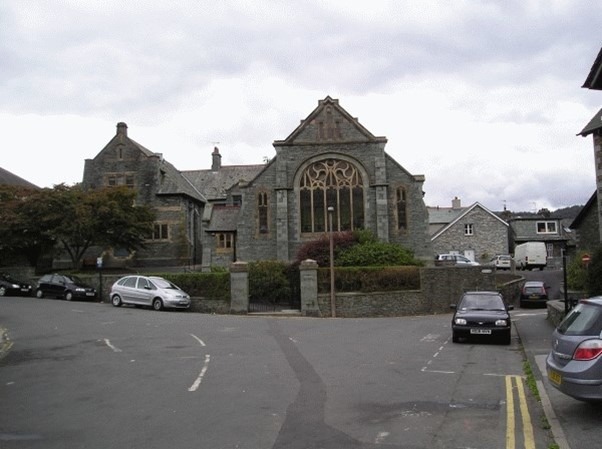
Wesley Court is a stunning building in breath-taking surroundings. Located in the town of Ambleside in the Lake District, it’s a block of social housing like few others. Up until twenty years ago, the building was known as Ambleside Methodist Chapel. Wesley Court contains fourteen households who would otherwise be forced to leave Ambleside.
But this isn’t a closed church: Ambleside Methodist Church is still very much alive. They were brave enough to think about how they could best use what they had to serve their community. Two problems were presenting themselves – the lack of affordable housing and the need for a modern community space. Meanwhile, the Church of England parish, St Mary’s, had been thinking about how to provide a new centre, but did not have the £1 million required to build it.
The Methodists decided to sell their building to a housing association to provide housing for local people and use the proceeds to fund a new community centre in collaboration with St Mary’s. They now share this new Parish Centre for worship and other church activities. This is also much more appropriate to their needs than the Chapel, which was in need of significant renovation.
Background
Not only is Wesley Court picturesque, it’s also badly needed. Ambleside is beautiful. So beautiful, in fact, that there is a real shortage of houses for local people – holiday homes abound, and building is restricted to conserve the area. The price of existing housing is driven up by the holiday market, meaning that many local people can’t afford to live there.
St Mary’s only has one side room and a traditional main worship area, meaning that it did not cover all the needs of the church and the wider community. They were particularly keen to develop youth work, which was impossible in this space.
‘We knew the needs of the area’, says John Biggs, a member of the Methodist church, and they were determined to do something. With a small congregation, they didn’t need the large chapel, and they realised that they could make do with one of the rooms in the new Parish Centre. They decided to kill two birds with one stone: by selling their building to a housing association, they were able to donate £470,000 to plug the gap in funding for the new community centre, while providing housing for those in need. In the end, there was little discussion, because, as John put it, they knew that it was ‘the most useful way to use it’.
The Methodists chose Home Housing Association to purchase and redevelop their building after considering various other housing associations, as they have a good reputation in the area. The builders were sensitive to the heritage of the building, incorporating its beautiful stained glass into the new accommodation. There is no longer any direct contact between the church and the housing association.
Impact
The inhabitants of Wesley Court – all of whom have a local connection to the area – are able to remain part of the town’s life. One resident is an active member of the Methodist church. With a small congregation, every loss is significant.
Meanwhile, the new community centre is fulfilling a need for a community hub in the area. The Methodists and Anglicans see governing it as part of their mission. However, the community ‘has come to “own” it’, says John Biggs, a member of the Methodist church. Its use ‘has extended well beyond our original imagining’. They are now hosting youth clubs, activities for older people and free weekly lunches.
What do you need?
Finances
- The eventual cost of the Parish Centre was over £1 million.
- Costings increased several times. Always expect the budget to go up!
- There was £395k of Heritage Lottery funding.
- This had to be spent within a year of being granted, which is often the case. It is important that you take conditions like this into account when applying for funding.
- The Methodists provided £470k towards the costs – this came out of the £700k received for the sale of their building; the remainder went to the Methodist Church nationally.
- This sale was at ‘the going rate’, but they believe they may have received more if they had not stipulated that they would only sell the site for use as social housing.
- St Mary’s and the Diocese of Carlisle contributed £110k between them.
- There were also some relatively small charitable trust donations.
- The outstanding sum was paid off quickly with church fundraising.
- Originally, running costs for the Parish Centre were supported by grants from charitable trusts.
- They are now self-sufficient, being almost totally funded through room lettings.
Real estate
- The new Parish Centre was built mostly within the grounds of St Mary’s.
- The old Methodist chapel – with a Sunday School building attached – was ‘quite sizeable’.
Partnerships
- Ambleside Methodists emphasise that part of the reason that this worked was that ecumenical relationships between the two churches were already strong. Even if you’re not at this stage, building these relationships could be really helpful. Find out more in our advice on building relationships.
- When sharing resources in this way, it’s important to have the legal documents setting out the terms of the partnership. For the Parish Centre, they have eight legal documents, including what would happen if one of the churches wished to withdraw.
- The two churches are treated as equal partners, despite the disparity in their financial contribution.
- A committee was established with equal numbers of members from the denominations to oversee the running of the Parish Centre.
Tips
- This approach may not be appropriate in your particular context, but it speaks to a wider point – how can you best use your property to help your community?
- If we build relationships with other faith communities and groups, we can reduce duplication in order to work more effectively and serve our communities.
- There was a bit of confusion with the property managers higher up in the Methodist church about whether the church was being ‘closed’, because it was unconventional for them not to have their own building.
- Although the name ‘Parish Centre’ was used in the secular sense, it is sometimes assumed that it belongs only to St Mary’s. This is a lesson for others thinking about ecumenical projects!
For more information on this scheme contact Dr John Biggs.


